Gaza Ceasefire Nears Breaking Point, UN Warned
A US peace envoy warns Gaza's fragile ceasefire is nearing collapse as Israeli strikes continue despite Hamas's pledge to disarm under Trump's plan.

Key takeaways
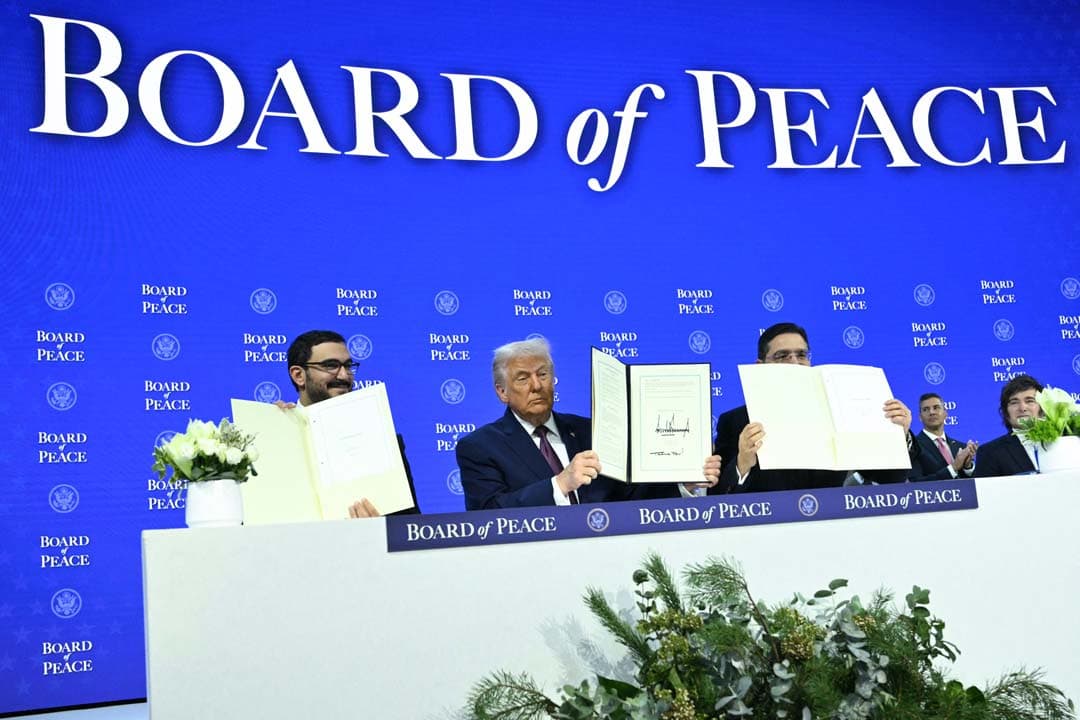
- The Board of Peace's lead official for Gaza told the UN Security Council that failure of the ceasefire process would represent a 'point of no return.'
- Hamas has agreed to hand over weapons under President Trump's 15-point roadmap, but Israeli Prime Minister Netanyahu has publicly rejected key elements of the plan.
- Gaza's health ministry says more than 1,280 Palestinians have been killed since the October ceasefire took effect, undercutting the deal's stated goal of ending hostilities.
What happened
Nickolay Mladenov, the top Gaza official on President Trump's Board of Peace, warned the UN Security Council this week that a collapse of the fragile ceasefire process would mark a point of no return for the territory. His remarks followed Israeli Prime Minister Benjamin Netanyahu's public rejection of parts of Trump's 15-point roadmap for ending the war, which Washington has cast as a path toward stability in Gaza.
Hamas formally accepted the roadmap in late July, agreeing in principle to a phased handover of weapons overseen by an International Stabilization Force. But continued Israeli strikes since then have raised doubts among mediators and analysts about whether the broader ceasefire, first reached in October, can hold together.
Why it matters
Gaza's Ministry of Health says more than 1,280 Palestinians have been killed and over 4,200 wounded since the ceasefire officially began, a toll that undercuts the deal's central premise even as it remains formally in place. The gap between the diplomatic framework and events on the ground has become a defining feature of the past several months.
The roadmap's next steps, including deployment of a technocratic administrative body and the stabilization force meant to oversee post-war governance, depend heavily on the disarmament process moving forward. If that process stalls, officials warn there may be no functioning structure left to manage reconstruction or security in the territory.
Evidence and context
Israel's government has said it has serious security concerns about the disarmament plan, and members of Netanyahu's coalition have publicly resisted key provisions. Hamas, for its part, has agreed to what officials call decommissioning of weapons but has resisted language implying outright surrender, and has tied further steps to Israeli withdrawal from areas beyond the ceasefire's original demarcation line.
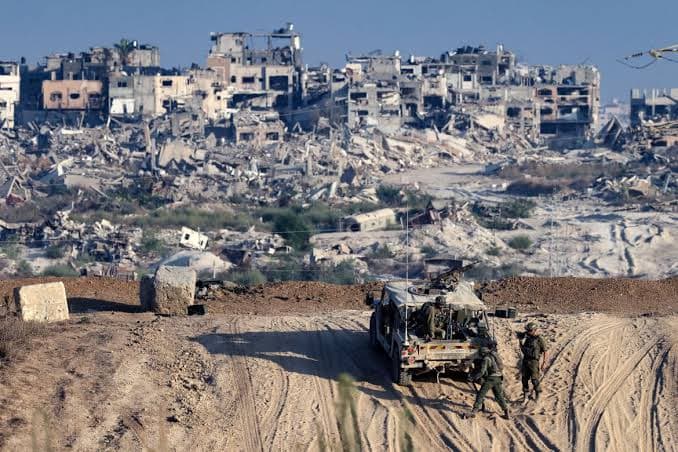
Analysts tracking the process note that Israeli control over Gaza has expanded since the ceasefire took hold in October, growing from roughly half the territory to nearly seventy percent today. That expansion has complicated efforts to establish the administrative and security structures the roadmap calls for.
There will be no roadmap to return to.
— Nickolay Mladenov, high representative for Gaza on Trump's Board of Peace
The people and places affected
Civilians in Gaza continue to bear the brunt of the ongoing strikes even under the nominal ceasefire. Health officials have described conditions approaching a complete breakdown of basic services in parts of the territory, with hospitals and civil defense teams still recovering bodies from strikes that occurred weeks earlier.
The stabilization force intended to oversee the next phase remains in its early stages, led by a U.S. general but not yet fully deployed. Its eventual footprint, and whether Palestinian factions accept its presence, will likely determine how much of the roadmap can realistically move forward.
The open questions
The most pressing question is whether continued Israeli strikes will push Hamas and allied factions to abandon the disarmament process altogether, a scenario regional analysts say Israel could use to justify a wider military campaign.
It also remains unclear how far the United States is willing to press Israel to scale back operations in order to keep the roadmap alive, given the administration's public investment in the plan as a signature diplomatic achievement.
What comes next
Mediators are expected to continue shuttle diplomacy in the coming weeks to keep the disarmament track from collapsing entirely, with the UN Security Council likely to receive further briefings from the Board of Peace as the situation develops.
For residents of Gaza, the practical difference between the ceasefire holding on paper and the reality of continued strikes has become increasingly difficult to separate, leaving the broader question of reconstruction and governance still unresolved.
Michael Reed
Michael Reed covers international affairs, energy and climate policy. He connects developments overseas with the decisions facing communities, companies and policymakers in the United States.
More from Michael