Rail Unions Sound Fresh Alarm on $85B UP-NS Merger
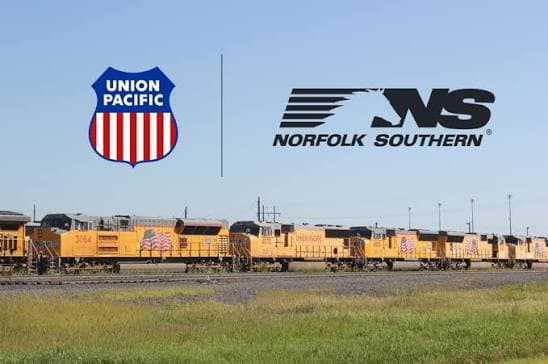
Rail unions renew warnings over the proposed $85 billion Union Pacific-Norfolk Southern merger as regulators weigh its impact on safety and shipping costs.

Key takeaways
- Rail unions representing more than half the combined workforce of Union Pacific and Norfolk Southern are pressing regulators over safety and cost concerns tied to the $85 billion merger.
- The Surface Transportation Board is reviewing the deal under a stricter public-interest standard adopted after a wave of disastrous rail mergers in the 1990s.
- Union Pacific says it has signed job-for-life agreements with several unions, but critics argue the deal could still shift work to lower-paying short-line railroads.
What happened
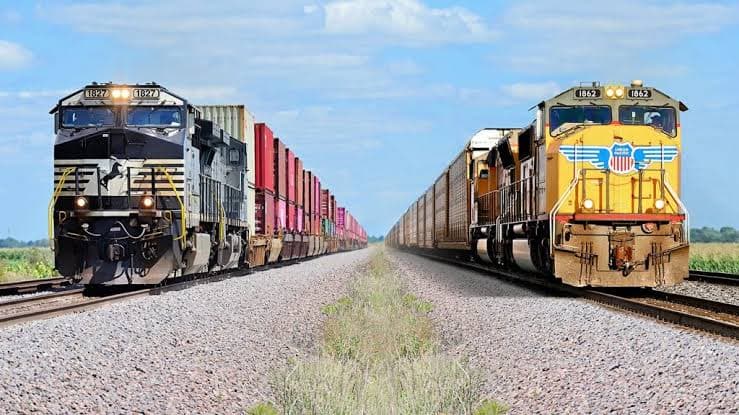
Rail labor groups have renewed their objections to the proposed $85 billion merger of Union Pacific and Norfolk Southern, a deal that would create the first transcontinental railroad in U.S. history. The Brotherhood of Locomotive Engineers and Trainmen and the Brotherhood of Maintenance of Way Employes Division, which together represent more than half the combined companies' workforce, have raised concerns over safety, job security and the potential for higher shipping costs.
Their opposition joins a broader coalition of critics that includes the American Chemistry Council, several agricultural trade groups, and rival railroad BNSF, all of which have pushed back on the deal as it moves through regulatory review.
Why it matters
The merger would combine two of the country's largest freight railroads into a single transcontinental network, a level of consolidation not seen in the industry in more than two decades. Critics warn that a combined system could raise shipping rates and, by extension, consumer prices across a wide range of goods that rely on rail freight.
The deal is also being closely watched as a test case for the Surface Transportation Board's tougher merger standard, adopted in 2001 after a series of poorly managed rail mergers in the 1990s caused shipment delays stretching weeks or even months for businesses across the country.
Evidence and context
Under the 2001 rules, any merger among the six largest U.S. railroads must be shown to serve the public interest and enhance, rather than reduce, competition, a more demanding bar than the standard used two years ago when regulators approved Canadian Pacific's $31 billion acquisition of Kansas City Southern.
Union Pacific has said it has formalized job-for-life agreements with five unions to address workforce concerns, and the deal retains support from the nation's largest rail union, which represents conductors. President Trump has also spoken favorably of the merger. Critics counter that nothing in the current agreements would stop the combined company from shifting jobs hundreds of miles away or selling off less profitable lines to short-line operators that typically pay less.
This proposed monopoly will end up costing businesses more and those costs will be passed on to consumers.
— Brotherhood of Locomotive Engineers and Trainmen National President Mark Wallace
The people and places affected
Union workers along the merged railroad's routes, as well as shippers in small towns and rural areas that depend on rail service for agricultural and industrial goods, stand to be most directly affected by how the combined network is structured. Labor groups argue that smaller communities could see reduced service if the merged company prioritizes its main long-haul routes.
Transportation researchers have also flagged the deal's potential to trigger a follow-on wave of consolidation among the remaining major North American railroads, a scenario some analysts say could eventually leave the country with only a small handful of large freight carriers.
The open questions
The central question facing regulators is whether the merger can clear the stricter public-interest standard, given the breadth of opposition from unions, shippers and competing railroads, none of which has been formally tested under the current rules.
It also remains unclear how enforceable Union Pacific's job guarantees will prove over time, particularly given that unions say workforce reductions could still occur gradually through attrition even if no formal layoffs take place.
What comes next
The Surface Transportation Board's review is expected to continue for months, with public comment periods and hearings likely to feature testimony from labor groups, shippers and competing railroads on both sides of the debate.
Union Pacific and Norfolk Southern will need to make their public-interest case to regulators in detail, a process that industry watchers say could stretch well into next year before a final decision is reached.
Michael Reed
Michael Reed covers international affairs, energy and climate policy. He connects developments overseas with the decisions facing communities, companies and policymakers in the United States.
More from Michael