Army Secretary Driscoll Resigns Amid Hegseth Rift
Dan Driscoll steps down after months of friction with Defense Secretary Pete Hegseth over promotions, firings and the Army's modernization push.

Key takeaways
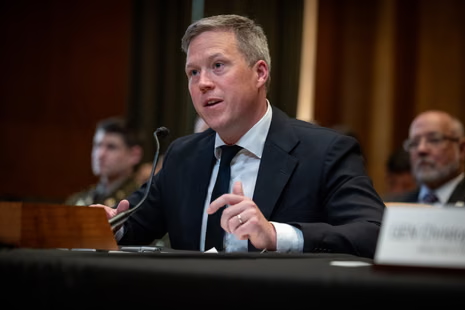
- Army Secretary Dan Driscoll has resigned after a year of clashes with Defense Secretary Pete Hegseth over senior officer promotions and firings.
- Driscoll, a close associate of Vice President JD Vance, is the latest senior Pentagon official pushed out under Hegseth's tenure.
- The departure lands six months into the war with Iran and ahead of the midterm elections, a period typically marked by administration turnover.
What happened
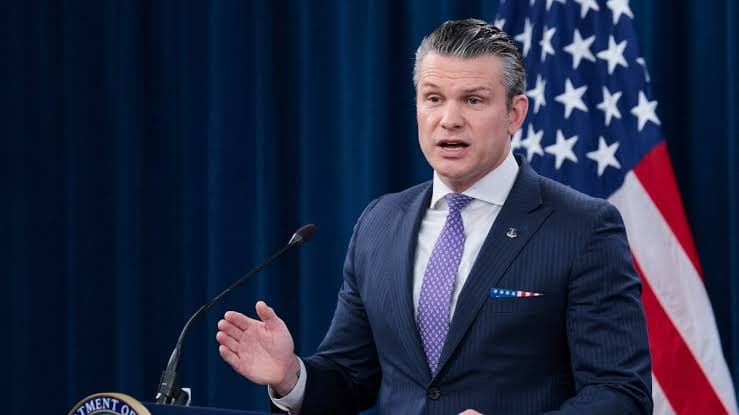
Army Secretary Dan Driscoll has stepped down from his post, with the White House confirming the president accepted his resignation. Driscoll reportedly met with the president in person before submitting the resignation, telling associates in recent weeks that he intended to leave the administration around the Labor Day holiday. A White House spokeswoman credited Driscoll with strengthening the Army's readiness and assisting with diplomatic efforts on the Ukraine-Russia conflict.
The resignation caps roughly a year of visible tension between Driscoll and Defense Secretary Pete Hegseth. The two disagreed repeatedly over Hegseth's removal of senior officers, including the Army's former chief of staff, who was ordered into immediate retirement earlier this year without public explanation. Driscoll had also resisted pressure from Hegseth's office to remove members of his own staff and to strike several officers from a long-delayed promotion list.
Why it matters
Driscoll's exit marks the latest in a string of high-profile departures from the Pentagon's civilian leadership under Hegseth, following the ousters of the Navy secretary and the Army's top uniformed officer. Taken together, the turnover has raised concerns among lawmakers in both parties about institutional stability at the department during an active overseas conflict.
The rift also carries political weight beyond the military. Driscoll's close friendship with Vice President JD Vance, a potential 2028 presidential contender, had shielded him from earlier pressure to leave, and his departure removes a moderating figure many in both parties viewed favorably from a Pentagon increasingly defined by Hegseth's aggressive reshaping of senior ranks.
Evidence and context
According to officials familiar with the matter, the immediate friction centered on a promotion list of roughly three dozen officers that Hegseth held up for months over objections to a handful of names, including several Black officers and women. Driscoll declined to remove them from the list, a standoff that eventually drew White House attention because senior promotions require review before heading to the Senate.
Driscoll also reportedly raised concerns directly with the president about the Army's broader modernization effort, arguing that Hegseth's personnel decisions were undercutting initiatives on drone capability and lessons drawn from the war in Ukraine.
When a service secretary and a defense secretary can no longer agree on who leads troops, the fallout reaches far beyond the Pentagon's halls.
— Priya Shah
The people and places affected
Driscoll, an Army veteran who took the role in February 2025, had been regarded as a rare figure with support across the political aisle. His departure follows the earlier removal of a senior aide who had served as the public face of the Joint Chiefs under a previous chairman, a move Driscoll had resisted before ultimately complying.
Within the Army, officers awaiting promotion decisions have faced months of uncertainty tied to the standoff, and personnel familiar with the department describe a workforce watching closely for who Hegseth selects as Driscoll's successor.
The open questions
The most immediate question is who the president will nominate to replace Driscoll, with Hegseth's own spokesman reportedly among those interested in the position. That choice will signal whether the administration intends to continue consolidating control over senior military personnel decisions under Hegseth.
A second question is what becomes of the stalled promotion list and the broader modernization priorities Driscoll championed, particularly as the Army continues to operate under wartime pressure with the conflict against Iran ongoing.
What comes next
Driscoll is expected to formally step down in the coming days, and attention will quickly shift to his successor and whether that person shares Hegseth's approach to personnel changes. Congressional committees overseeing the military are likely to seek further explanation for the pattern of departures at the Pentagon's senior ranks.
Melonpost will continue following developments inside the Department of War as a new secretary is named and as the effects of this year's leadership turnover become clearer.
Sarah Mitchell
Sarah Mitchell covers science, technology and health, with a focus on artificial intelligence, medical research and digital policy. She explains emerging ideas and the questions they raise for everyday life.
More from Sarah