Stocks Slide for Third Day as Bond Yields Surge
Wall Street posts a third straight losing session as oil prices and global bond yields surge, with tech stocks leading the Nasdaq's decline.


Key takeaways
- The Dow fell more than 400 points and the Nasdaq dropped roughly 1% as technology and chip stocks led a third consecutive losing session on Wall Street.
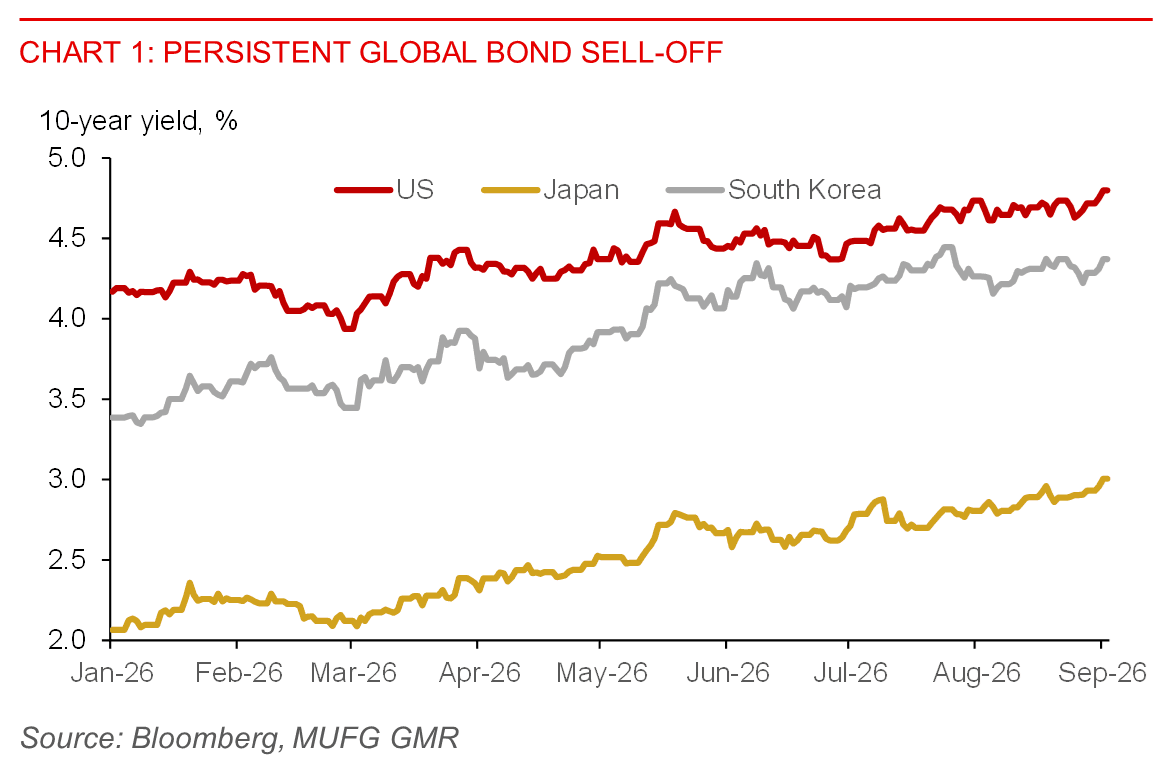
- UK 30-year gilt yields hit their highest level since 1998, part of a broader global bond selloff that also pushed German and U.S. yields higher.
- Asian markets fell sharply overnight, with Japan's Nikkei down nearly 3% and South Korea's Kospi dropping 4% as investors braced for potential rate hikes.
What happened
U.S. stocks fell for a third straight session this week as surging bond yields and rising oil prices weighed on sentiment. The Dow Jones Industrial Average dropped more than 400 points, while the Nasdaq Composite slid around 1%, with technology and chip stocks bearing the brunt of the selling.
The declines followed a rocky start to September, when West Texas Intermediate crude jumped above $90 a barrel, its highest level since late July, after fresh U.S. strikes near the Strait of Hormuz and reports of an overnight attack on a cargo vessel transiting the waterway.
Why it matters
The selloff reflects growing investor anxiety that persistent inflation, driven in part by energy costs tied to the Middle East conflict, could force central banks toward tighter policy rather than the rate cuts markets had been anticipating earlier this year.
Global markets felt the ripple effects overnight, with Japan's Nikkei 225 closing down nearly 3%, South Korea's Kospi falling 4%, and Australia's benchmark index dropping close to 1%, underscoring how tightly linked bond markets and equities have become amid the current bout of volatility.
Evidence and context
The bond selloff was especially pronounced in the UK, where 30-year gilt yields soared to their highest level since 1998 and 10-year yields climbed as much as 11 basis points, as traders raised bets on further Bank of England rate increases. German government bonds, a benchmark for eurozone borrowing costs, also moved higher.
Adding to inflation concerns, data released this week showed eurozone inflation accelerated to 3.3% in August from 2.9% in July, driven largely by a jump in energy costs, cementing market expectations that the European Central Bank could raise rates later this month.
Wall Street needs weak statistics to unlock interest-rate relief here.
— a market strategist quoted on the day's trading session
The people and places affected
Energy stocks were a rare bright spot amid the broader selloff, with the State Street Energy Select Sector SPDR ETF hitting a new all-time intraday high as rising oil prices lifted the sector even as they weighed on the rest of the market.
Homebuilders and retailers with exposure to consumer spending, including Home Depot and Lowe's, also declined sharply, reflecting investor concern that higher borrowing costs and energy prices could squeeze household budgets in the months ahead.
The open questions
The key question for investors is whether upcoming economic data, including job openings and manufacturing figures, will show enough softening to revive expectations for rate cuts, or whether persistent inflation forces central banks toward a more hawkish path.
It also remains unclear how much further the Strait of Hormuz standoff could escalate, and whether continued attacks on shipping in the region could push oil prices, and by extension inflation expectations, even higher.
What comes next
Investors are looking ahead to this week's jobs and manufacturing reports for clearer signals on the health of the economy, data that could prove decisive in shaping the Federal Reserve's next policy move.
Markets will also continue watching developments in the Strait of Hormuz conflict closely, given how directly oil prices have been driving both bond yields and equity market swings in recent sessions.
Olivia Brooks
Olivia Brooks covers the economy, financial markets and the changing world of work. She explains what shifts in prices, borrowing costs and business activity mean for households.
More from Olivia